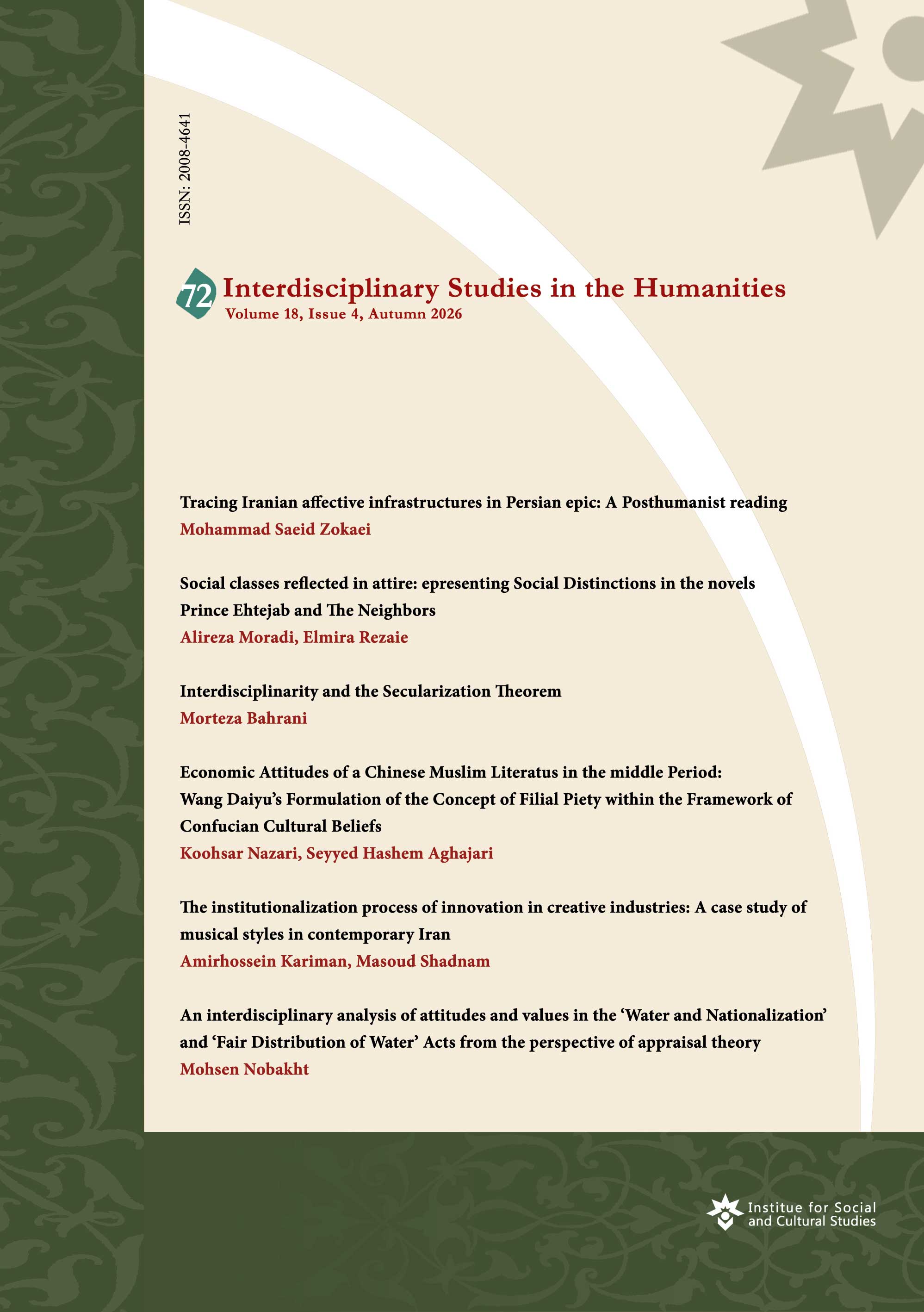
The quarterly journal of Interdisciplinary Studies in the Humanitiesis an open access double blind peer reviewed journal established and published by the Institute for Social & Cultural Studies affiliated to the Ministry of Science, Research & Technology. It aims to create a space of dialogue from the interdisciplinary perspective of different practical, empirical and theoretical research involved in the fields of the humanities, specially social science, and higher education. In this way, it becomes possible to confront and interpret the complex systems that underpin contemporary society. The journal is available both in print and online.
Advantages:
Open access: ISIH is an open access journal and all articles published are freely available to scientific researchers, research scholars and the general public.
Full peer review: Manuscripts that pass the initial screening undergo peer review with at least two independent referees.
Abstract Core concepts of the posthumanist turn—distributed agency, relationality, non-human individuality, assemblage—are usually presented as late twentieth-century Western conceptualizations. This paper argues that traces of these constructs appear as affective infrastructures in Ferdowsi's Shahnameh (4th century AH). A close reading of the Simorgh in Zal's upbringing, Rostam's symbiotic bond with Rakhsh, and Attar's Conference of the Birds shows that Persian epic contains an early articulation of posthumanism with deep effects on Iranians' affective infrastructures and resilience. Drawing on Latour, Haraway, and Bennett, I argue that heterogeneous human and non-human elements of Iranian epic display agency in various forms. The recent invocation of Rostam and the Simorgh as sources of resistance and national cohesion in war demonstrates the enduring vitality of premodern posthumanist frameworks in Iran. By reversing the temporal and geographical hierarchy of Western theory, the paper reveals diverse genealogies of posthumanist thought from a postcolonial perspective. Reading the Shahnameh as an independent theory opens new opportunities for Iranian cultural studies and for localizing posthumanist thought. The central claim is that attention to forgotten premodern, non-Western articulations of posthumanism, and to the living, affective subjectivity of the Shahnameh, is essential.
Abstract Focusing on the two novels Prince Ehtejab and The Neighbors, this study examines the role of dress in reflecting the class structures of Iranian society within these narratives. The principal aim of the research is to analyze how dress is employed to depict class differences, reinforce or contest social norms, and attain a deeper understanding of the structures of power within society. To examine the relationship among language, power, and social structures in the two novels, this study employs a critical discourse analysis approach. The findings reveal that dress is not merely a superficial element but a potent instrument for representing and critiquing class structures. In both novels, dress is deployed to differentiate among distinct social classes, reinforce social norms, and signal historical-social transformations. In Prince Ehtejab, for instance, attire clearly delineates the divide between the aristocracy and the subaltern classes, whereas in The Neighbors, dress functions as a symbol of poverty and deprivation. This study demonstrates that both novels, through dress, engage in the representation of existing socio-class structures, albeit with differing intensities and methods. Overall, the present study underscores the significance of dress as a symbolic instrument for a deeper understanding of the social and class structures within modern Persian literature.
Abstract Interdisciplinary research and education are legitimate only within a sphere that has affirmed the legitimacy of the modern age. One indication is a functional rupture with traditional forms of knowledge. The question is whether interdisciplinarity in Iran have fulfilled such a condition. It appears that two decades of interdisciplinary contributions in Iran still remain distant from the functions emerging from rupture. An examination of works that take interdisciplinarity itself as their subject, as well as works that discuss various subjects through an interdisciplinary approach, demonstrates that their authors maintain a continuity-oriented will toward tradition and the past. The resistance of Iranian writers and researchers to rupture with the past may be discussed under the category referred to as the secularization theorem. This theorem assumes that modern consciousness is the secularized form of ancient Christian or pagan consciousness. Iranian authors likewise, generally within the framework of the same theorem, seek to bring about an indigenous modernity through the rereading, transmission, and transformation of tradition. One sign of the failure of this mode of contribution is precisely the interdisciplinary arrangement of knowledge in Iran. Through a concise analysis of the secularization theorem by way of explaining the categories of substance/function and continuity/rupture, this article elucidates the pathology of continuity-oriented essentialism in the articles published in the Quarterly Journal of Interdisciplinary Studies. It then, by focusing on one rupture-oriented article among them, prepares the ground for further discussions. Without continuity being called into question, and without a will toward rupture from the essences of tradition, neither the disciplinary system of knowledge nor the interdisciplinary system can fulfill their proper function.
Abstract The concept of filial piety, as one of the foundational concepts of traditional Chinese thought, has long been a source of political and economic debate due to its conceptual ambiguity and multiple layers of meaning. Drawing on an interdisciplinary approach and employing the framework of Conceptual History, inspired by the work of Reinhart Koselleck, this study examines the following question: How did Wang Daiyu, in the context of the political and economic crises of the late Ming dynasty, understand economic life through the conceptual relationship between filial piety and its counter-concept, loyalty? The findings demonstrate that Wang Daiyu appropriated the Confucian concepts of filial piety and loyalty and incorporated them into Islamic religious discourse as well as the social and political life of Chinese Muslims. While he did not adopt every dimension of the Confucian understanding of filial piety, he reconfigured the relationship between these concepts by placing loyalty and obedience to God above obedience to the ruler and to one's parents. At the same time, he accepted the Confucian conception of political authority and the emperor's status as the "Son of Heaven." Like Confucian thinkers, Wang regarded the state, with the emperor at its apex, as responsible for regulating economic affairs and securing the livelihood and material welfare of the people. In his thought, therefore, filial piety was not merely an ethical virtue but also a fundamental politico-economic concept. His political-economic outlook substantially converged with the Confucian understanding of economic governance and with the broader premodern Chinese conception of the relationship between politics and the economy.
Abstract Art is one of the most dynamic domains of human life, yet artistic innovations do not share the same destiny: some attract temporary attention and disappear, while others become embedded in collective memory. Understanding the mechanisms behind this difference is particularly important in creative industries. Drawing upon institutional theory, this study investigates how innovative musical styles become institutionalized in contemporary Iran and why some innovations gain permanence while others are forgotten. The research adopts an interpretive qualitative approach using grounded theory within a multiple-case study design. Data were collected through archival sources and semi-structured interviews with members of eight innovative Iranian music groups, selected through purposive sampling with a snowball strategy, and analyzed through open, axial, and selective coding until theoretical saturation was achieved. Five major themes were identified: the organic emergence of innovation through artists' internal creative interactions; the formation of an initial niche audience through shared taste and informal channels; stylistic stabilization through authenticity and audience loyalty; negotiations for institutional support after audience consolidation; and the acceptance or rejection of that support. The findings demonstrate that audience formation precedes institutional endorsement and serves as a critical condition for the long-term survival of innovative musical styles. The study concludes that institutionalization in creative industries emerges through ongoing interactions among artists, audiences, and institutional actors rather than through formal legitimacy alone. The proposed model contributes to institutional theory by highlighting cultural identity, audience engagement, and adaptive institutional arrangements, with practical implications for artists, cultural entrepreneurs, and policymakers.
Abstract Water laws in Iran reflect dominant attitudes and ideologies of each historical period. Despite previous legal and historical research, a gap exists in systematic linguistic and discourse analysis of these texts. This study compares the "Water Nationalization Act" (1968) and the "Fair Water Distribution Act" (1982) using Appraisal Theory (Martin & White, 2005) to reveal their attitudinal and legitimation strategy differences. The corpus comprises both laws: the 1968 Act with 342 clauses and the 1982 Act with 217 clauses. Coding was based on three components: Attitude, Engagement, and Graduation. Reliability was 92% through recoding. Data were analyzed using a mixed quantitative-qualitative method. Both laws are state-centered, but legitimation strategies differ. The 1968 Act features negative emotions (unhappiness: 3.5%, insecurity: 3.2%) and administrative judgments, indicating coercive control. The 1982 Act shows increased positive emotions (security: 6.9%, desire: 6.4%) and socio-moral judgments. However, monoglossia rose from 4.1% to 9.2%, showing participation is defined under state supervision. Graduation components also increased, suggesting centralized management. The 1968 Act employs national ownership and coercive control, while the 1982 Act employs social justice and controlled participation for legitimation. The distinction between "institutional participation" and "discursive heteroglossia" reveals that increased participatory institutions do not necessarily mean discursive openness. Future research should extend this framework to other natural resource laws.
Abstract Despite the acknowledged importance of the undergraduate general curriculum in cultivating interdisciplinary perspectives among students, the underlying rationale behind such curricula in Iran remains unclear. This comparative study explores and evaluates the undergraduate general education curriculum within Iran’s higher education system alongside that of four international institutions: Mount Royal University ((MRU), the University of New South Wales (UNSW), the Polytechnic University (PolyU), and the National University of Singapore (NUS). This study employed a qualitative approach and the data systematically gathered and analyzed by Bereday's four stages method. The findings reveal that, in contrast to the Iranian undergraduate general education curriculum, where students do not have much freedom in choosing subject clusters or course units, the selected universities employ flexible and decentralized curricular structures. Their intended learning outcomes and course offerings encompass a broader and more diverse array of subjects—including personal and organizational development, local, national, and global identities, the natural and mathematical sciences, as well as the arts—all framed within an interdisciplinary orientation. These international curricula are more responsive to both the societal and individual needs of students. In conclusion, the study recommends a comprehensive review and needs assessment of Iran’s undergraduate general curriculum, emphasizing the integration of interdisciplinary approaches to enhance educational quality and ensure alignment with evolving societal demands and stakeholder expectations.
Abstract A thoughtful university is an institution that moves beyond instrumental functions and the mere transmission of knowledge, focusing instead on critical reflection, scholarly dialogue, and social responsibility. Given the structural challenges and the dominance of quantification in Iranian higher education, the present study aimed to develop a theoretical model of the thoughtful university within the context of Iranian higher education, drawing on the lived experiences of faculty members of the Faculty of Humanities at the University of Kurdistan. The study adopted a qualitative approach using grounded theory methodology based on Strauss and Corbin’s systematic design. The research population consisted of faculty members of the Faculty of Humanities at the University of Kurdistan. Using purposive sampling with a theoretical orientation, twenty faculty members were selected as the study sample. Data were collected through semi-structured interviews. Data analysis was conducted in three stages: open coding, axial coding, and selective coding. The causal conditions identified included the search for meaning, experiences of constraints, and environmental transformations. The contextual conditions comprised faculty culture, individual characteristics, and organizational conditions. The intervening conditions included evaluation policies, university management, and the climate of interaction. In response to these conditions, faculty members adopted strategies such strengthening scholarly dialogue within the university environment, rethinking teaching and research practices, drawing the collective capacities of faculty members, and managing ways compatible with structural constraints. The consequences of these strategies were categorized as strengthening intellectual life within the university, transforming students’ educational experience, improving the quality scholarly activity, and gradually redefining role the university in society. The findings indicated the realization of the thoughtful university Iran requires a transition from rigid and quantitatively oriented structures toward reflective agency among faculty members and the creation of informal spaces for dialogue.
Pouriya Sardasht, Mahmood Abolghasemi, Mohammad Ghahramani, Farnoosh Alami
Abstract Entrepreneurship is among the most important outcomes of university development and requires novel management approaches such as "organizational ambidexterity," which refers to the simultaneous pursuit of exploiting existing capacities and exploring knowledge for the future. This paper aims to design and validate a balanced ambidextrous university model for entrepreneurship development. The research method is mixed-methods with a sequential exploratory design. The target population in the qualitative phase consisted of higher education management experts, with whom 14 semi-structured interviews were conducted purposefully. The statistical population in the quantitative phase included managers and relevant faculty members of Iranian public universities, of whom 256 were selected through stratified random sampling and responded to a researcher-developed questionnaire. Qualitative data were analyzed using thematic analysis, while structural equation modeling was employed in the quantitative phase to validate the model. Instrument validity was confirmed using convergent (AVE>0.5) and discriminant validity indices, and reliability was confirmed through Cronbach's alpha and composite reliability. The findings in the exploitation dimension include components such as university policies and structures, university-industry interaction, education-research development, budget, and university culture. In the exploration dimension, components include needs assessment and training, forward-looking structure, financial resources, innovative policy and culture, future-oriented management, and strategic innovation. Furthermore, ambidexterity balancing strategies were identified in the form of policy and evaluation - resources and structure components. Factor analyses confirmed the validity of the components, and fit indices confirmed the overall validity of the model. The proposed ambidexterity model, by preventing unproductive stagnation and fruitless innovation, paves the way for university-centered entrepreneurship development and, through establishing an effective linkage between university and industry, lays the groundwork for the formation of entrepreneurial ecosystems within universities.
Abstract Until the late twentieth century, scientific activity was often considered independent of non-cognitive factors. However, in the last few decades, many studies have challenged this notion and shown that science is also influenced by non-cognitive factors, including values. However, the problem is that the interference of values can have undesirable consequences such as weakening scientific objectivity, reducing public trust, and harming democratic ideals; therefore, providing a solution that can prevent these consequences is one of the important topics in the field of science and values. The aim of this article is to explain this problem, examine and criticize existing solutions in this field, and provide a solution for it. The proposed solution emphasizes the need for the establishment of an institution and interdisciplinary cooperation; because it is shown that this problem has scientific, philosophical, and social aspects, and the appropriate solution must be able to respond to all of them. Achieving such a response is only possible through the establishment of an institution that enables interdisciplinary collaborations and assumes responsibilities at three theoretical, executive, and supervisory levels to counter the undesirable consequences of value interference.
In the contemporary era, technology has evolved beyond being merely a tool at the service of humanity; it has become a force with the potential to fundamentally alter nature, society, and the destiny of mankind. Characteristics such as relentless expansion, boundless power, and long-term, often unpredictable consequences have transformed technology into a unique yet perilous phenomenon. Alongside the countless opportunities that technology has provided for human progress, it has also introduced threats such as environmental degradation, social instability, and the endangerment of future generations. In response to these transformations, Hans Jonas proposed the "Principle of Responsibility," emphasizing that humanity can no longer make decisions without considering their technological ramifications. According to Jonas, ethical responsibility entails a conscious commitment to a future that is more vulnerable than ever. The unprecedented expansion of technology forces humanity to look beyond immediate and individual interests, holding us accountable for the global and long-lasting effects of our actions. From this perspective, the relationship between technology and ethical responsibility is an inseparable and fundamental one. It is a connection that, in its essence, underscores that the survival of humanity and the Earth depends on a deeper understanding of the consequences of technological actions and a commitment to principles that prioritize the preservation of life, nature, and core human values.
mohammad mehdi khosravi olya, seyed mehdi sajadi, alireza sadeghzade, AbdolAzim Karimi
Abstract This article, adopting an interdisciplinary and transdisciplinary approach inspired by integral ecology, cultural ecology, and deep ecology, and influenced by the idea of integral education and pre-modern worldviews, delves into the fundamental assumptions, principles, and concepts of Iranian culture. When harmoniously integrated, these elements can lead to the creation of a unified and alternative educational approach, enabling an effective transition through contemporary ecological mega-crises for Iranians. This transdisciplinary harmonious integration has been endeavored by employing the methodological possibilities of problem-solving known as “design thinking.” Using “arts-based research,” this paper argues that pre-modern civilizations’ understanding of the “ongoing flow of the sacred in nature” led to a lasting relationship with the complex ecosystem network of life surrounding local communities. The primary goal of this research is to propose a “regenerative learning and education approach” that is “aligned with life.” This is achieved through recreating the profound interaction and connection between humans and the ecosystem of life, thus paving the way for the regeneration of ecosystems, with a focus on Iran’s local ecosystems.
Abstract One of the approaches that has gained attention in recent decades for embedding social values in technology is the Value-Sensitive Design (VSD) approach. This idea is based on the premise that technology is not "value-neutral," but rather "value-laden." Although this approach has generally been considered in discussions of designing and embedding values in technological systems, due to the unique characteristics of artificial intelligence, its generalization to AI-based systems and its implementation and execution have encountered various challenges.
This paper, employing an analytical-inferential method within an interdisciplinary framework, focuses on the methodology of embedding ethical and social values in artificial intelligence technology and its challenges. The research findings indicate that in the pursuit of embedding ethical-social values in AI, two of its unique features—self-learning and self-decision-making—create challenges at different levels of value-sensitive design. These challenges include ambiguity in defining and prioritizing values, implicit marginalization of some groups, lack of transparency, opacity, and unexplainability of systems, the phenomenon of value disembody, difficulty in translating ethical concepts into technical requirements, and the complexity of assessing the real-world impact of values in practice. To address these challenges, suggestions such as adopting a hybrid structure in Value Sensitive Design, developing regulatory and evaluation frameworks, enhancing AI literacy, and implementing mechanisms for monitoring intents are proposed. This research’s aim is to contribute to a deeper understanding of the obstacles and challenges in embedding values and ethics in AI by clarifying and conceptually expanding the Value-Sensitive Design approach in AI. Furthermore, by emphasizing the importance of interdisciplinary synergy, it seeks to outline practical strategies for the development of responsible AI aligned with social values.
Abstract In recent decades, interdisciplinarity has become a central concept in the organization of knowledge, the solution of complex problems, and the reconsideration of disciplinary boundaries. However, much of the existing literature has focused mainly on knowledge integration and has paid less attention to how interdisciplinary collaborations move beyond temporary interactions and become stable and legitimate discourses within the scientific field. This article addresses this missing link by introducing the concept of interdisciplinary rituals. Its central argument is that interdisciplinary rituals consist of recurring linguistic, interactive, cognitive, institutional, identity-forming, and legitimizing patterns that enable the transition from epistemic difference to knowledge integration and interdisciplinary discourse formation.
Adopting a theoretical-conceptual approach, the article revisits the relationship between knowledge, scientific practice, and discursive stabilization through the lenses of interdisciplinarity studies, discourse theory, and ritual theory. In this framework, the perspectives of Klein and Repko on interdisciplinary integration are examined alongside the works of Foucault, Laclau, Durkheim, Turner, Goffman, and Catherine Bell on rituals as mechanisms for producing order, meaning, identity, and legitimacy. The article argues that interdisciplinarity is not simply the result of combining disciplines and methods, but depends on a process of ritualization through which repetition, recognition, norm formation, and trust shape a shared epistemic community.
Accordingly, the article proposes a conceptual model that begins with epistemic difference and culminates in interdisciplinary discourse formation. Its main contribution lies in shifting the analytical focus from integration to stabilization, and from collaboration to discourse-making.
Abstract ABSTRACT
Global discourse increasingly positions Geospatial Artificial Intelligence (GeoAI) as an inevitable horizon for the smart conservation of cultural heritage. Yet this technology-centered discourse presupposes the existence of governed data infrastructures and faces substantial challenges when translated into contexts such as Iran. Drawing on an interdisciplinary and critical framework that brings together critical geography and spatial studies, public administration and public policy, and critical Science and Technology Studies (STS), this article argues that the central challenge in the management of cultural heritage in Iran lies not in the absence of sophisticated technologies, but in the lack of governed data infrastructures as the fundamental precondition for digital transformation. This study adopts a qualitative approach and employs methodological triangulation through critical discourse analysis of policy documents, particularly the National Artificial Intelligence Strategy; analysis of institutional performance data; and field observations conducted within the governmental body responsible for cultural heritage management. The findings show that the structural absence of integrated and standardized databases has reduced the discourse of heritage smartification to a “Smartification Illusion,” producing a condition conceptualized here as the “Pre-Data Stage”. In response to this structural misalignment, the article proposes a phased framework of heritage data governance in which the establishment of governance arrangements, standards, and institutional capacities is treated as a prerequisite for investment in advanced analytical tools. It concludes by emphasizing the need to redirect attention and resources away from performative technological initiatives and toward the foundational task of building robust data governance structures.
Abstract This study aims to identify the key factors shaping the structure of scientific capital in influential research centers within Iran’s higher education system. Employing a qualitative, descriptive-analytical approach, the research draws on interviews with 15 experts and stakeholders from the Institute for Cultural and Social Studies—one of the country’s prominent academic research centers—and supplements these insights with content analysis of relevant literature on the state of research in such institutions.
Findings reveal that factors such as open and participatory research governance, researcher development and empowerment, scientific credibility enhancement, and supportive resources and infrastructure act as facilitators of scientific capital. In contrast, bureaucratic and hierarchical administration, reduction of scientific management to objectivism and quantification, low societal recognition and influence of research, lack of promotion of creativity, innovation, and scientific dynamism, and neglect of scientific capital cultivation and sustainability serve as inhibitors.
The study concludes that to play an effective role in research policymaking, academic research centers must promote indigenous interdisciplinarity, ensure the practical relevance of research, and foster active engagement of both internal and external stakeholders.
Abstract The rapid expansion of artificial intelligence (AI) has confronted educational systems with a generation that exhibits distinctive cognitive, behavioral, and value-related characteristics. Research evidence and reports from international organizations indicate that educational structures grounded in industrial-era paradigms have fallen behind in meeting the needs of this generation, and in Iran this misalignment has been further intensified by constraints on financial and human resources. This article aims to provide an interdisciplinary analysis of the dimensions of this misalignment by integrating insights from educational sciences, generational sociology, cognitive science, futures studies, and science and technology policy, and to design a phased set of solutions for harnessing AI within Iran's pre-university education system. The study employs documentary analysis; its corpus comprises reports from UNESCO, the Organisation for Economic Co-operation and Development (OECD), and the World Economic Forum, alongside recent systematic reviews and official Iranian statistics, which were purposively selected and subjected to thematic analysis. The findings show that the new generation—characterized by parallel information processing, interactive learning, and a preference for short-form content—faces six gaps within the educational system: technological, skill-related, methodological, applicational, motivational, and cultural. International experience suggests that success in narrowing these gaps depends on national consensus, infrastructure development, teacher empowerment, and a flexible curriculum. The study concludes that the digital transformation of the educational system requires a three-stage roadmap that begins with short-term skill enhancement in technology adoption and progresses toward personalized learning and a redefinition of the teacher's role—a trajectory in which educational policy must position AI not as a replacement for the teacher but as an enabler of the teacher.
Abstract This article offers a fundamental critique of technological solutionism by examining the interdisciplinary mechanisms through which digital technologies, algorithms, and data infrastructures are framed as direct remedies for complex social and urban problems. The introduction shows that solutionism, by erasing the historical and contentious dimensions of public issues, reduces politics and policymaking to a technical domain while reshaping the ways problems are perceived, defined, and rendered governable. Methodologically, the study draws on critical textual analysis, theoretical frameworks from Science and Technology Studies, critical theory, smart-city research, and reviews of Iran’s national planning documents. Rather than relying on quantitative data, it adopts conceptual genealogy, power analysis, and comparative assessment of techno-political formations across national and global contexts. The findings unfold in three central directions. First, the article demonstrates that solutionism rests on technological determinism and instrumental rationality, which naturalize technology and elevate efficiency at the expense of political imagination and normative judgment. Second, the analysis of surveillance-oriented and data-driven infrastructures shows that the presumed neutrality of data is itself a political construct that reproduces epistemic exclusion and expands authoritarian control. Third, a comparative examination of smart urbanism and Iran’s national planning reveals that technocratic logics exacerbate institutional fragility, reduce accountability, and limit meaningful public participation. The article concludes by arguing for a reflexive and democratic technopolitics centered on epistemic plurality, institutional learning, and substantive public engagement. Such an orientation positions technology not as an instrument of control or exclusion, but as a means for strengthening democratic agency, social justice, and institutional resilience.
Abstract In the contemporary world, technology is no longer merely an instrument but a mediating force in the formation of human subjectivity, memory, and social relations. The rapid integration of digital technologies into education, particularly in the aftermath of the COVID-19 pandemic, has created profound opportunities as well as significant challenges for educational institutions. However, previous research has largely overlooked the relational and mediating nature of technology. Drawing upon Bernard Stiegler's concept of the *pharmakon*, this article develops an integrated conceptual framework for understanding the pharmacological relationship between technology and education and for explicating their simultaneous potential as both possibility and danger. To this end, informed by Stiegler's philosophy, the authors employ the philosophy of technology and phenomenology to elucidate the ontological foundations of the human–technology relationship. They further draw on Freudian–Lacanian psychoanalysis, cognitive science—particularly findings from the neuroscience of reading—and the sociology of institutions to examine the reciprocal effects of this relationship on psychological, cognitive, and institutional domains. In addition, perspectives from the political economy of media and critical theory are employed to analyze the broader dynamics of digital capitalism and educational policymaking. The findings indicate that technology, as a *pharmakon*, is inherently ambivalent: on the one hand, it can foster grammatization, individuation, and sublimation; on the other, it can produce proletarianization, disindividuation, and desublimation. Accordingly, educational systems should not only transmit knowledge but also function as institutions that cultivate care for the psychic well-being of individuals and society while safeguarding attention against the crises generated by the commodification of attention.
Abstract Background and Objectives: Transhumanism, as a philosophical and scientific movement, utilizes modern technologies to overcome human biological and cognitive limitations. These transformations, while offering opportunities, have also created challenges in the realms of meaning, identity, and human values. The aim of this research is to examine the effects of transhumanism on the crisis of meaning and to propose strategies for managing these changes.
Method: This research was conducted using a qualitative and analytical-descriptive approach. Data were collected through documentary studies and content analysis of credible sources in the fields of philosophy, sociology, psychology, and technology. A comparative method was used to analyze different perspectives on the impact of transhumanist technologies on human meaning and identity.
Findings: Transhumanist technologies have extensive effects on meaning, identity, and lived human experiences. Reducing death and biological limitations may alter motivation and meaning in life. Enhanced cognitive and physical abilities could also transform individual and social identity. Unequal access to these technologies may create new social divides.
Conclusion: The impact of transhumanism on human meaning and identity is multidimensional and cannot be evaluated as purely positive or negative. While these transformations provide unprecedented opportunities for human advancement, they also bring profound philosophical and ethical challenges. Managing these changes requires precise policymaking, the development of new ethical and philosophical frameworks, and interdisciplinary collaboration. Societies must pay attention to adapting to these transformations and take measures to reduce inequalities and preserve human values.
Abstract Street graffiti, as a multidimensional communicative-artistic phenomenon, has increasingly attracted attention in contemporary urban studies. While prior research has focused on its aesthetic, protest, or informal aspects, the complex processes of meaning-making and the ways street artists engage with urban signs and symbolic layers remain underexplored from the perspective of lived experience. This study investigates meaning-making in street graffiti through the conceptual metaphor of “urban cannibalism,” examining how artists ingest, digest, and reproduce existing signs to create meaning and reconfigure urban space.
A qualitative approach grounded in interpretative phenomenology was employed. The study population included 20 active graffiti artists in Tehran (12 men and 8 women), purposefully selected through snowball sampling. Data were collected via in-depth semi-structured interviews and analyzed using thematic content analysis with MAXQDA software, focusing on understanding artists’ lived experiences and the symbolic layers of their interventions.
Findings revealed ten main themes illustrating the stages of urban cannibalism, from initial reading of space and pre-existing signs, selection of abandoned areas, creative integration with environmental elements, digestion of formal and commercial signs, to the synthesis, continuity, and reproduction of meanings in observers’ experiences. These themes reflect a dynamic, gradual process of meaning and space re-creation.
The study concludes that street graffiti is not merely a visual act but a multilayered symbolic process resisting spatial homogenization. Theoretically, it contributes to urban art and spatial production studies; practically, it offers insights for urban planners and cultural policymakers. Limitations include access challenges, focus on Tehran, and reliance on individual narratives.
Abstract In recent times, various "relational views" based on the "principle of complexity" have emerged as alternatives to essentialist approaches, collectively referred to as the "relational turn". However, the philosophical foundations of these views are often ambiguous, leading to potential confusion with "relativist perspectives" or "interactive views" informed by Habermas' Communicative Action. Contemporary scholarly concerns in the humanities and social sciences -such as new emphasis on materiality, embodied practices, affects and intuition, spatiotemporality, post-humanism, and even the co-disciplinary- to understand human-societal processes, stem from "relational thought" but lack proper elucidation of their ontological and epistemological underpinnings. The article employs the Synthesis Research Method to comprehensively analyze and categorize "relational perspectives" based on their ontological roots to address these issues. Moreover, it seeks to elaborate a "co-disciplinary and (deep) relational epistemological and methodological framework" by utilizing "general epistemic components" and "key components of the (deep) relational view based on flat ontology". From this viewpoint, knowledge possesses multiple, heterogeneous, mediated, and contextual nature, drawing from the intertwined resources of "conscious subjectivity" (conscious deliberation or reflexivity) and "objectivity" (external environment). Furthermore, unconscious mediators, such as "collective ideal" (culture and discourse) and "individual embodied" (psychophysical characteristics) mediators, play an essential role in shaping knowledge. Knowledge exhibits uncertain and contingent boundaries, and is in a perpetual state of "becoming". Drawing inspiration from Latour, the methodology is premised on developing "assemblage/deployment programs". Importantly, the epistemic framework can apply to a wide spectrum of fields, from humanities and social sciences to art, spatial planning, and public policy, with the potential to promote single disciplines into co-disciplinarity and co-disciplines into trans-disciplinarity.
Abstract The phenomenon of migration, and in particular foreign emigration, is an important social, cultural and demographic issue that needs to be investigated. The purpose of this article is to investigate the views of the Supporters and Opponents of emigration among the Kurdish citizens of Sardasht city, which has been done using the theory of justification systems or regimes of action of Luc Boltanski and Laurent Thévenot, which is one of the prominent approaches in the field of cultural sociology. The use of Boltanski and Thévenot's perspectives in both the theoretical section and the interpretation of the interviewees' views, as well as the comparison of the views of the supporters and opponents of immigration, is an innovative aspect of this article. The research method is qualitative and based on a constructivist interpretive approach and an Abductive strategy, employing purposive and snowball sampling methods, and using semi-structured interviews with 26 citizens of Sardasht (13 residents of Sardasht and 13 residents of foreign countries). The findings of the research, based on the six worlds of Boltanski and Thévenot that describe the justification systems of the two groups' pros and cons of Emigration, consist of two distinct reasoning spectra based on six sites including: Inspired, domestic, civic, Fame, market, and industrial'. Ultimately, the rhetoric of the two groups pros and cons of immigration based on the mentioned six worlds can be summarised and categorized in a dialectical combination of "resistance-persistence". action regimes, cultural sociology, demography, emigration, justification Systems
Elham Parvizi, Saba Sandani, Hosna Sadat Shams Dolatabadi
Abstract Emotional feedback or the possibility of emotional sharing with every phenomenon around a person can be an indicator his liveliness. The ability of humans to interact with their surroundings has always been of great importance because its realization increases the quality of human life. In Christopher Alexander's theories, the degree of aliveness of space and the perception of it through emotion is considered important. On the other hand, the animation of space is also discussed in the empathetic domain, and the function of the mirror neurons of the brain in architectural spaces and the ability of human beings to imagine vividness in relation to it, enables them share the emotion. Given the importance of living space and human interaction with it, this research seeks to find the differences and similarities of these two perspectives so that ultimately the conceptual and practical model derived from these two theories can help design living spaces. This research is qualitative and descriptive-analytical type, which compares these two attitudes by examining the main features of living space in Alexander's "Self-Mirror Test" and "Empathetic Architecture" through inductive reasoning and logical analysis. The findings show that a living space in empathy theory can reflect a range of good and bad feelings, but in the mirror self-test, spaces with good feelings are more alive and provide the quality of innate human presence. This research can assist in designing spaces that not only meet the practical needs of individuals but also take into account the emotional and affective aspects of their lives. Considering the emotional and experiential characteristics of space, the design of empathetic and vibrant environments can have more positive effects on human psychology.
Abstract The central question of this paper is to investigate the historical conditions that enabled the emergence and formation of the discourse surrounding "Iranian civilization." In other words, what specific historical circumstances could facilitate the emergence of this particular form of discursive narrative (as opposed to others), and through which accumulations and concentrations of discourse has this new discursive system been produced and sustained up to the present moment? In this regard, the issue will be examined as an initial moment in the birth and development of discursive narratives (zero degree), focusing on the organizing cores of the knowledge-power system that led to the establishment of the theoretical foundations of "Iranian civilization." This analysis will be framed within Michel Foucault's archaeological methodology. By identifying and analyzing this zero-degree discourse, the initial and homogeneous moments of this narrative can be revealed, which are characterized by a lack of differentiation. This approach is reminiscent of Foucault's methodology in History of Madness. Following this process, a new discursive order emerges as a direct result of the accumulation and concentration of propositions surrounding this discourse. Specifically, this accumulation pertains to racially charged [Aryan], anti-Arab, and antiquarian propositions that emphasize a longing for a return to the lost grandeur and magnificence of ancient Iran as central signifiers within the discourse of "Iranian civilization. The concentration of these propositions around the narrative has generated a new discursive order that did not exist at zero degree. This discursive order is characterized by a dualistic formulation of Aryan [Iranian] and Semitic [Arab] as the theoretical foundation for Iranian civilization, thereby laying the groundwork for the emergence of this narrative. Prior to the emergence and hegemonization of Aryan nationalist and anti-Arab discourses—dominant within Iranian romantic nationalism that mourned for lost greatness—such a discursive order based on an Aryan-Semite dichotomy did not exist. This dichotomy later became established as a theoretical foundation for "Iranian civilization," specifically within contemporary narratives about Iranian civilization.
Shahriar Shirooyehpour, Morteza Anoosheh, Safar Fazli, Mohammad Aniseh, Einollah Keshavarz Turk
Abstract In recent decades, philosophers of science have focused on how science is influenced and structured by values. This view stands in contrast to the ideal of "value-free science," which views the intrinsic involvement of non-cognitive values in scientific practice as destructive. However, today, there are many criticisms of this ideal, and it is referred to as a "bad ideal." It is now widely accepted that values and value judgments are involved in various ways of scientific practice—from selecting research projects to evaluating and accepting scientific results. This issue holds even greater importance in futures studies as a value-laden science, given its humanistic and interdisciplinary/transdisciplinary nature, which seeks to shape and construct the future. Accordingly, this article examines the role and influence of values in futures studies to clarify which forms of value involvement are legitimate and which are not. To address this question, two approaches are adopted: first, proposing a typology of values based on their goals, and second, distinguishing between the direct and indirect roles of values. Then, an attempt is made to adapt these approaches to the futures studies literature. Finally, we argue that considering these aspects can provide futurists with a framework for understanding the role and structure of values, potentially enhancing the quality, credibility, and authority of futures studies. Keywords: desert, merit, entrepreneurship, duoethnography In recent decades, philosophers of science have focused on how science is influenced and structured by values. This view stands in contrast to the ideal of "value-free science," which views the intrinsic involvement of non-cognitive values in scientific practice as destructive. However, today, there are many criticisms of this ideal, and it is referred to as a "bad ideal." It is now widely accepted that values and value judgments are involved in various ways of scientific practice—from selecting research projects to evaluating and accepting scientific results. This issue holds even greater importance in futures studies as a value-laden science, given its humanistic and interdisciplinary/transdisciplinary nature, which seeks to shape and construct the future. Accordingly, this article examines the role and influence of values in futures studies to clarify which forms of value involvement are legitimate and which are not. To address this question, two approaches are adopted: first, proposing a typology of values based on their goals, and second, distinguishing between the direct and indirect roles of values. Then, an attempt is made to adapt these approaches to the futures studies literature. Finally, we argue that considering these aspects can provide futurists with a framework for understanding the role and structure of values, potentially enhancing the quality, credibility, and authority of futures studies.
Abstract Undoubtedly, education and especially providing new and effective methods in education is one of the most important needs and concerns of any country in the contemporary world. The purpose of this paper is to show that, contrary to the fact that apparent poetry, literature and mathematics are very far from each other and unrelated, they have taste connections in different ways. In this paper, taking into account a descriptive-analytical method, while reviewing the rise and fall of this bond, the author discusses the ontology, reasons and similarities of poetry and mathematics. Also, by presenting examples, an attempt is made to show how poetry and mathematics can, to some extent, be effective and permeable in understanding and scrutinizing each other. The findings indicate that it is possible to benefit from the collaboration between of these two fields in education at high schools and colleges.
Abstract Social criticism is considered one of the most fundamental concepts in modern social sciences, which has played a pivotal role in the analysis of power structures, dominant ideologies, and social representations since the Enlightenment. The present study, relying on the documentary method and a qualitative approach, analyzes and compares four prominent schools of thought - the Frankfurt School, feminism, post-colonial studies, and post-modernism - that have been more loyal to the social critical movement than other schools of thought, in relation to social criticism. The data were collected through a systematic review of theoretical texts and previous studies and examined with an analytical approach. The results of this analysis show that although these schools differ in terms of epistemological foundations, methodology, and historical origins, they all consider criticism to be a political, revealing, and liberating act that aims to deconstruct dominant discourses and challenge the status quo.Based on these analyses, the present study extracts five key components of social criticism—politicalness, exposure, liberation, focus on the underdog, and social construction of reality—that are considered in all four schools of thought, and provides a theoretical framework for analyzing and evaluating critical discourses. The present study has attempted to present a structured picture of the nature and function of social criticism in the theoretical context of contemporary schools of thought through case analyses.